
Many travel agencies assume Google Calendar or Excel are enough for guide scheduling. Yet specialized platforms improve guide-tour matching accuracy by over 40%, revealing a critical gap in operational efficiency. Tour operators juggling multiple guides, languages, and skill requirements face complexities that generic tools simply cannot address. This guide explores how purpose-built calendar management transforms scheduling chaos into streamlined operations.
Table of Contents
- Introduction To Calendar Management In Travel
- Common Challenges And Need For Specialized Solutions
- Technological Solutions And Benefits Of Automation
- Key Features Of Advanced Scheduling Platforms
- Common Misconceptions About Scheduling Tools
- Practical Implementation And Impact Of Calendar Management Solutions
- Sustainability And Strategic Scheduling
- Conclusion And Next Steps For Adoption
- Streamline Your Tour Scheduling With EasyPlanning
- Frequently Asked Questions
Key Takeaways
| Point | Details |
|---|---|
| Manual scheduling wastes resources | 70% of small tour operators report inefficiencies with manual processes |
| Automation cuts idle time | Specialized platforms reduce guide idle time by up to 45% through intelligent matching |
| Accuracy improves dramatically | Guide-tour matching accuracy improves by more than 40% with dedicated scheduling tools |
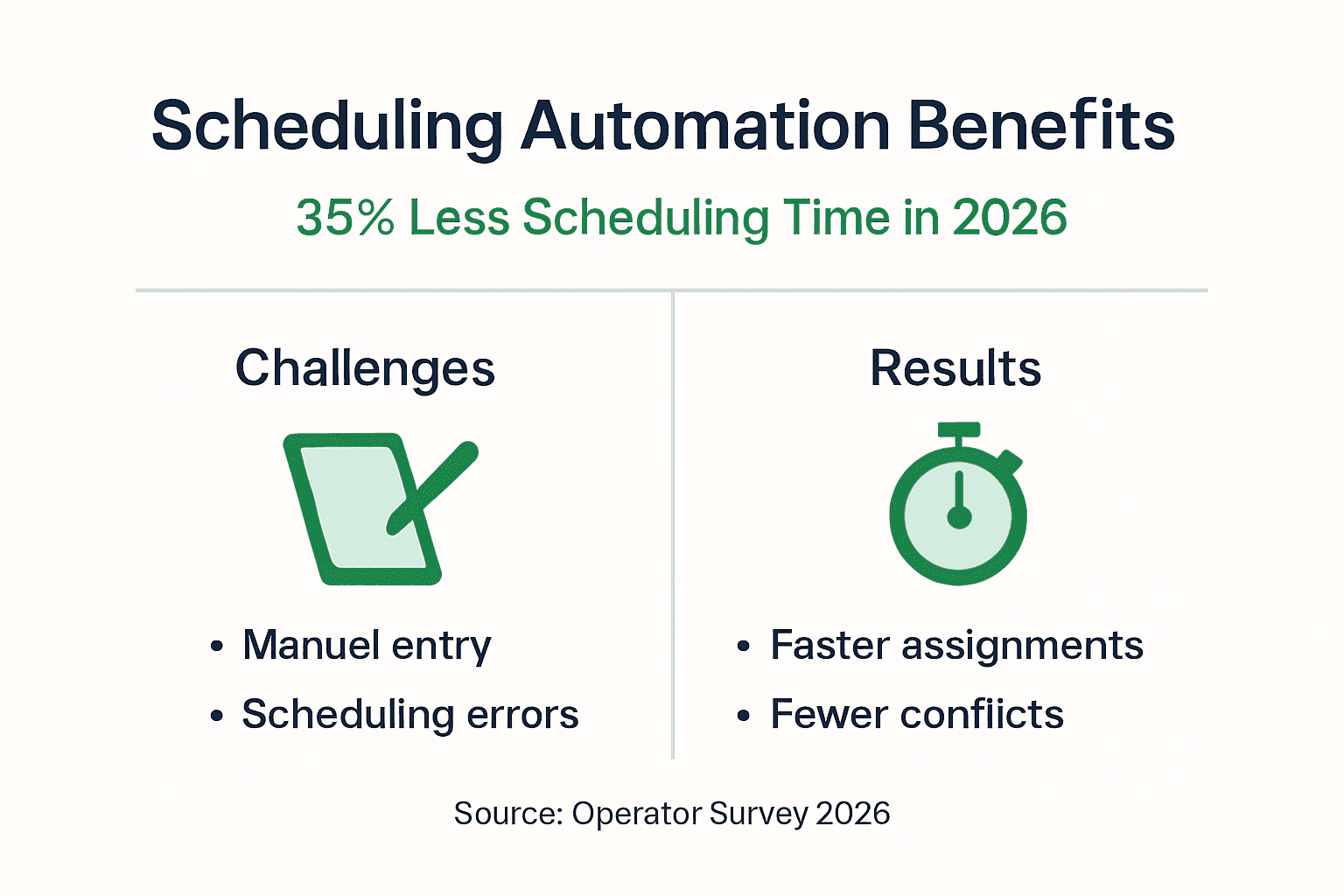
| Time savings are substantial | Implementation reduces scheduling time by 35% while improving tour punctuality |
| Reliability increases significantly | Real-time notifications cut missed tours by 30%, boosting customer satisfaction |
Introduction to Calendar Management in Travel
Tour guide scheduling demands far more than simple date tracking. You need to match guides with specific language skills to international visitors. You must account for certification requirements, availability conflicts, and multi-tour assignments across different locations. Manual scheduling methods such as Excel and fragmented channels create unnecessary complexity.
These outdated approaches fragment communication across WhatsApp, email, and phone calls. Information gets lost. Confirmations arrive late. Double bookings emerge from lack of centralized visibility. As your tour offerings expand and guide roster grows, spreadsheet chaos and scheduling challenges multiply exponentially.
Effective calendar management centralizes all scheduling data in one accessible platform. Everyone sees current assignments, availability, and upcoming changes. Real-time updates eliminate the version control nightmares common with Excel files passed between managers.
Key scheduling complexities include:
- Matching multilingual guides to tourist demographics
- Tracking specialized certifications and tour type requirements
- Managing last-minute cancellations and guide substitutions
- Coordinating schedules across multiple tour locations
- Maintaining accurate records for payroll and compliance
Common Challenges and Need for Specialized Solutions
Fragmented scheduling creates a cascade of operational problems. When your operations manager updates Excel while your front desk books tours via email, conflicts become inevitable. A guide appears available in one system but is already assigned elsewhere. Tours get double-booked. Customers arrive to find no guide waiting.
70% of small and medium tour operators report inefficiencies when relying on manual processes. The administrative burden grows with every tour added to your schedule. Staff spend hours cross-referencing spreadsheets, sending confirmation texts, and resolving scheduling disputes.
Manual entry amplifies human error. A typo in a date field goes unnoticed until the scheduled tour day arrives. Phone calls get forgotten. Email chains become impossible to follow. WhatsApp messages disappear in group chat clutter.
Smaller operators suffer disproportionately because they lack dedicated scheduling staff. The owner or manager juggles booking confirmations, guide coordination, and customer service simultaneously. Excel scheduling challenges in the travel industry consume hours that could be spent growing the business.
Common pain points:
- No centralized view of guide availability across all tours
- Delayed confirmations leading to guide and customer frustration
- Inability to quickly identify qualified guides for specialty tours
- Lost revenue from scheduling errors and cancellations
- Time wasted resolving disputes over who was assigned when
Critical statistic: Tour operators using fragmented systems experience 3x more scheduling conflicts than those using centralized platforms, directly impacting customer satisfaction and operational costs.
Technological Solutions and Benefits of Automation
Modern scheduling platforms transform how you assign guides to tours. Automation reduces guide idle time by up to 45% by intelligently matching available guides to tours based on skills, languages, and location. No more manually scrolling through contact lists or checking individual calendars.

The system suggests optimal guide assignments the moment you create a tour. It filters by required languages, checks certifications, and considers current workload distribution. You approve assignments with one click instead of making multiple phone calls.
Multi-device synchronization ensures all stakeholders have current scheduling information instantly. Your guides receive push notifications about new assignments. Your office staff sees real-time updates. Field managers access schedules from mobile devices during tours.
AI-assisted optimization identifies patterns in your scheduling data. It suggests which guides to assign based on past performance, customer preferences, and efficiency metrics. The platform learns from your booking history to improve suggestions over time.
Pro Tip: Enable automatic notifications for all schedule changes. Guides respond faster to mobile alerts than email, reducing confirmation delays by 60% and virtually eliminating missed assignments.
Automation advantages:
- Instant guide availability checks across all scheduled tours
- Automated reminders sent 24 hours before tour start times
- Smart suggestions prioritizing guides with relevant experience
- Conflict detection preventing double-booking before assignments finalize
- Historical data analysis revealing scheduling patterns and bottlenecks
Performance impact: Operators implementing automated scheduling platforms report 40% faster assignment times and 50% fewer scheduling errors within the first month, with improvements continuing as the system learns booking patterns.
Key Features of Advanced Scheduling Platforms
Specialized calendar management requires features beyond basic date tracking. Guide profiles with searchable skills and language filters let you instantly find qualified guides. You filter by Spanish fluency, wilderness certification, or accessibility training in seconds.
Centralized calendars provide comprehensive visibility. Color-coded assignments show which guides work which tours at a glance. Multi-level approval workflows ensure supervisors review assignments before confirmation. You maintain control while delegating scheduling tasks to team members.
Specialized platforms reduce scheduling errors by 50% and missed tours by 30% through automated notifications. Guides receive instant alerts about new assignments, changes, and cancellations. Customers get confirmation messages automatically. Everyone stays informed without manual follow-up.
Audit trails enhance transparency and reduce scheduling disputes by 25%. Every schedule change records who made it, when, and why. When questions arise about past assignments or payroll, you access complete historical data. No more he-said-she-said arguments about who was scheduled.
Integration capabilities connect your scheduling system to booking platforms, payment processors, and communication tools. Data flows automatically between systems. You avoid manual data entry and the errors it introduces.
Pro Tip: Prioritize platforms offering mobile apps with offline access. Guides working in areas with spotty connectivity need to view schedules and confirm assignments without constant internet connection.
| Feature Category | Basic Tools | Specialized Platforms |
|---|---|---|
| Guide Filtering | Manual search | Skills, languages, certifications, location |
| Availability Tracking | Static calendar | Real-time, multi-tour visibility |
| Notifications | Manual emails | Automated push alerts, SMS |
| Audit Trail | None | Complete change history with timestamps |
| Approval Workflows | Ad hoc | Multi-level, customizable |
| Integration | Limited | Booking systems, payments, communications |
Essential platform features:
- Customizable guide profiles with unlimited skill tags
- Drag-and-drop calendar interface for quick scheduling
- Automated conflict detection with suggested alternatives
- Role-based access control for different staff levels
- Mobile-responsive design for on-the-go management
- Bulk assignment tools for recurring tour series
Common Misconceptions about Scheduling Tools
Many operators believe Google Calendar handles tour scheduling adequately. Generic calendar apps lack critical features for complex guide management. You cannot filter by guide skills, track certifications, or maintain audit trails. Specialized platforms improve guide-tour matching accuracy by over 40%, proving generic tools fall short.
Small operators assume digital platforms cost too much for their scale. 70% of small tour operators experience inefficiencies with manual scheduling, demonstrating that even modest operations benefit from automation. The time saved typically covers software costs within weeks.
Some managers view notifications as unnecessary extras. Real-time alerts prevent the most common scheduling failures. Guides miss tours because they forgot assignments or never received confirmation. Automated reminders virtually eliminate these costly mistakes.
Another myth suggests implementing new systems disrupts operations excessively. Phased rollouts minimize friction. You test features with a small tour subset before full deployment. Staff adapt quickly when training focuses on daily workflows rather than every possible feature.
Myth-busting realities:
- Generic calendars cannot handle multi-attribute guide matching
- Manual scheduling costs more in wasted time than software subscriptions
- Misconceptions about manual scheduling persist despite clear efficiency data
- Notification systems reduce missed tours by nearly one-third
- Modern platforms require minimal technical expertise to operate
Practical Implementation and Impact of Calendar Management Solutions
Successful implementation follows a structured approach. First, assess your current scheduling pain points and desired improvements. Document how many hours staff spend on scheduling weekly. Track error rates and missed tours.
Second, select software matching your specific needs. Evaluate platforms based on guide roster size, tour variety, and integration requirements. Compare pricing plans for EasyPlanning and similar solutions to understand total cost.
Third, train staff thoroughly before launching. Focus training on daily tasks like creating tours, assigning guides, and handling cancellations. Advanced features can wait until basic workflows become routine.
Fourth, implement features in phases:
- Import guide profiles and basic availability
- Begin scheduling new tours in the platform
- Enable automated notifications and reminders
- Activate approval workflows and audit trails
- Integrate with existing booking and payment systems
Fifth, monitor results against baseline metrics. Track time spent scheduling, error rates, and guide satisfaction. Adjust workflows based on feedback.
EasyPlanning implementation led to 35% less scheduling time and a 20% increase in on-time tour starts. These improvements compound over time as staff master platform features and guides adapt to automated communications.
Pro Tip: Assign a platform champion on your team who becomes the expert. This person troubleshoots issues and identifies optimization opportunities, accelerating adoption across your organization.
"We were drowning in WhatsApp messages and Excel chaos before switching to specialized scheduling. Within two months, our administrative time dropped by a third, and guide complaints about miscommunication virtually disappeared. The audit trail alone saved us during a payroll dispute." Tour Operations Manager, Southwest Adventure Tours
Measurable outcomes: Tour operators adopting specialized scheduling platforms report average improvements of 35% reduced administrative time, 50% fewer scheduling errors, 30% fewer missed tours, and 20% better on-time performance within six months.
Sustainability and Strategic Scheduling
Modern calendar management supports sustainability goals increasingly important to travelers. Digital platforms eliminate paper scheduling boards and printed guide rosters. You reduce office supply costs while demonstrating environmental commitment.
Prioritizing local guides through smart assignment algorithms supports community sustainability. The system can flag local guides first when matching skills to tours, keeping tourism revenue in the destination community. Travelers appreciate authentic experiences from guides with deep local knowledge.
Transparent scheduling builds trust with eco-conscious customers. You demonstrate fair labor practices through clear assignment records and equitable workload distribution. Audit trails prove guides receive proper rest between tours.
Adaptive scheduling features optimize routes and reduce unnecessary travel. When assigning guides to multiple tours, the platform considers locations to minimize transportation. Fewer miles driven means lower fuel consumption and reduced carbon footprint.
Sustainability benefits:
- Zero paper waste from digital record-keeping
- Reduced vehicle emissions through optimized guide assignments
- Support for local guide employment and fair scheduling
- Transparent labor practices appealing to ethical travelers
- Data-driven insights revealing opportunities to consolidate tours
Conclusion and Next Steps for Adoption
Effective calendar management transforms tour operations from chaotic to efficient. You reduce administrative burden while improving accuracy and customer satisfaction. Specialized platforms deliver measurable results: 35% time savings, 40% better matching accuracy, and 30% fewer missed tours.
Evaluating software requires focusing on travel-specific features. Generic tools lack guide filtering, skill matching, and audit capabilities essential for complex scheduling. Prioritize platforms designed specifically for tour operators rather than adapting general-purpose calendars.
Plan phased implementation with comprehensive staff training. Start small with core features and expand as your team gains confidence. Monitor key metrics to quantify improvements and identify optimization opportunities.
The scheduling challenges you face today will only intensify as your business grows. Implementing robust calendar management now positions you for sustainable scaling. You build operational foundations capable of supporting expansion without proportional increases in administrative overhead.
Take action by assessing your current scheduling process. Calculate time spent and error rates. Explore specialized platforms like EasyPlanning designed specifically for tour operator needs. Your future efficiency starts with today's commitment to better scheduling.
Streamline Your Tour Scheduling with EasyPlanning
Are you ready to escape scheduling chaos? EasyPlanning offers centralized, automated tour guide scheduling built specifically for travel operations. Our platform consolidates guide profiles, skill filtering, automated matching, real-time notifications, and complete audit trails into one intuitive interface.
You can reduce your scheduling time by 35% while improving tour punctuality by 20%. Stop juggling Excel sheets, WhatsApp groups, and email chains. Start managing guides efficiently with tools designed for your industry's unique demands.
Explore our pricing plans to find the right fit for your operation size. Access scheduling best practices and platform updates through our resource library. Join tour operators already transforming their operations with purpose-built scheduling technology. Try EasyPlanning today and experience the difference specialized tools make.
Frequently Asked Questions
What is calendar management in the travel industry?
Calendar management in travel organizes and automates tour guide scheduling and resource allocation. It ensures tours run punctually with properly matched guides based on skills, languages, and availability. Effective systems centralize scheduling data, replacing fragmented communication across Excel, email, and messaging apps.
Why do tour operators need specialized scheduling software?
Tour operators require features like guide skill filters, multi-tour matching capabilities, and comprehensive audit trails not available in generic calendars. Specialized platforms reduce scheduling errors by 50% through automated conflict detection and approval workflows. Generic tools cannot handle the complexity of matching multilingual guides with diverse certifications to varying tour requirements.
How difficult is it to implement a new calendar management system?
Implementation typically involves assessing current scheduling challenges, selecting appropriate software, training staff on core workflows, and rolling out features in phases. Most tour operators complete basic implementation within two to four weeks. Proper training and gradual feature adoption minimize disruptions while maximizing benefits and user acceptance.
What measurable benefits can I expect after switching to automated scheduling?
Expect to save 35% of scheduling time previously spent on manual coordination. Tour punctuality typically improves by 20% through automated reminders and conflict prevention. Administrative disputes decrease significantly with complete audit trails documenting every schedule change. Most operators see positive ROI within three months of implementation.
Recommended
- 3 Big Product Updates: Why "We Use Excel for Guide Scheduling" is a Thing of the Past
- From Spreadsheet Chaos to Smooth Sailing: Why Tour Operators Need to Rethink Scheduling
- Blog | EasyPlanning
- EasyPlanning – All-in-One Tour Scheduling & Guide Management for Tour Operators & DMCs
- Wedding Day Photo Timeline Guide for Stress-Free Photos – Plomien Wedding Photography
- Services for You Discover Exceptional Yacht Tour in Barcelona - SphynxBCN Luxury Tours