
Managing tour guides feels like juggling too many balls at once. You're tracking availability across WhatsApp, searching emails for certifications, and scrambling to find backup guides when someone cancels. This administrative chaos costs you time and creates scheduling conflicts that disappoint clients. Optimized guide profiles that consolidate skills, languages, certifications, and availability transform this mess into streamlined operations, cutting conflicts and boosting client satisfaction.
Table of Contents
- Selection Criteria For Effective Guide Profiles
- Key Elements Of Guide Profiles
- Examples Of Guide Profiles
- How Guide Profiles Enhance Scheduling Efficiency
- Comparison Of Guide Profile Approaches And Tools
- Situational Recommendations: Choosing The Right Guide Profile Setup
- Summary Comparison Table Of Guide Profiles
- Optimize Your Guide Scheduling With EasyPlanning
- Frequently Asked Questions
Key Takeaways
| Point | Details |
|---|---|
| Comprehensive guide profiles improve scheduling precision | Profiles including skills, languages, certifications, and availability enable accurate guide-client matching and reduce administrative overhead. |
| Automated matching accelerates assignments by 40% | Systems using standardized profiles reduce scheduling conflicts by 30% and speed up guide assignments significantly. |
| Backup guide details cut cancellations by 20% | Including backup contacts and real-time availability in profiles enhances operational resilience when primary guides are unavailable. |
| Performance metrics boost satisfaction by 15% | Integrating ratings, punctuality data, and client feedback into profiles enables data-driven assignments that improve customer experience. |
| Profile complexity depends on operational context | Small companies need simple profiles while international operators require detailed language and cultural competency documentation. |
Selection Criteria for Effective Guide Profiles
Building guide profiles that actually work requires focusing on the right attributes. Your profiles must capture the information you need when assigning guides to tours, not just generic biographical data.
Start with operational essentials. Effective guide profiles focus on skills, languages, availability, certifications, backup guide info, and performance metrics. Core skills define what tours each guide can lead, whether that's rock climbing expertise, historical knowledge, or culinary specialization. Language proficiency matters because matching guide languages to client needs prevents communication breakdowns that ruin experiences.
Availability data prevents double bookings. Real-time calendars showing when guides can work eliminate the back and forth of checking schedules manually. Certifications prove guides meet safety and legal requirements, essential for activities like scuba diving or wilderness expeditions.
Backup guide information is your insurance policy against cancellations. When your primary guide calls in sick, having backup contacts with verified availability means you can reassign tours in minutes instead of hours. Emergency contacts protect both guides and clients during unforeseen situations.
Performance metrics turn subjective assessments into objective data. Track punctuality rates, client ratings, and tour completion statistics. This information helps you assign your best guides to high value tours and identify who needs additional training.
Integration capability matters if you use tour scheduling software. Profiles that sync with your calendar system enable automated matching and reduce manual data entry errors that cause scheduling conflicts.
Pro tip: Start simple with essential fields, then add complexity as your team grows. Small operations need basic availability and language data while larger companies benefit from detailed skill taxonomies and performance dashboards.
Key Elements of Guide Profiles
Every guide profile should include attributes that directly impact client satisfaction and operational efficiency. These elements form the foundation for accurate scheduling and exceptional tour experiences.
Seven key guide qualities include passion, communication, storytelling, humor, flexibility, punctuality, and sensitivity. Document these traits in profiles to match guide personalities with tour types. A guide with exceptional storytelling skills excels at historical tours while someone with high energy works better for adventure activities.
Multilingual capabilities expand your market reach. List every language each guide speaks fluently, conversationally, and basically. Include dialect specifications for markets where regional variations matter. This granularity ensures clients communicate effectively with their guides throughout tours.
Certifications build trust and ensure compliance. Include first aid credentials, specialized activity licenses, and any safety training. Display expiration dates prominently so you never assign a guide whose credentials have lapsed.
Emergency contacts protect everyone. Store backup phone numbers, medical information, and insurance details. Quick access to this data during emergencies can save lives and reduce liability.
Performance data transforms gut feelings into informed decisions. Track on-time arrival rates, client satisfaction scores, and completion statistics. This objective information reveals which guides consistently deliver excellent experiences and helps you understand patterns in tour guide qualities that drive success.
Standardize profile formats across your team. Consistent structure makes updates efficient and ensures no critical information gets overlooked. Use dropdown menus for skills and languages rather than free text fields to maintain data quality.
- Core competencies and specializations
- Language proficiency levels with dialect notes
- Current certifications with expiration tracking
- Real-time availability calendars
- Emergency contact information
- Performance metrics and client ratings
- Backup guide assignments and preferences
Examples of Guide Profiles
Seeing how other operators structure profiles helps you build templates that work. These examples show different approaches for various operational needs and market types.
Effective guide profiles include availability, languages spoken, special skills, certifications, personality traits, and backup guide info to minimize cancellations. A multilingual city tour guide profile might list English (native), Spanish (fluent), and Mandarin (conversational), with availability Monday through Friday and certifications in first aid and local history. Personality notes could highlight exceptional storytelling ability and patience with large groups.
Adventure tour guides need different emphasis. Their profiles should prominently feature safety certifications, physical fitness levels, and emergency response training. Include wilderness first aid credentials, climbing instructor certificates, and rescue training documentation. Profiles adding emergency contacts and health certifications enhance guest safety and trust.
Backup-inclusive profiles reduce last-minute cancellations. For each primary guide, list two backup guides with similar skills and availability. Include contact preferences so you know whether to call, text, or email when you need a quick replacement.
Specialization-heavy profiles work for niche markets. A wine tour guide profile might detail sommelier certification levels, vineyard relationships, and expertise in specific wine regions. Culinary tour guides should list chef training, food safety credentials, and restaurant industry connections.
Here's how profile elements compare across tour types:
| Profile Element | City Tours | Adventure Tours | Culinary Tours | Cultural Tours |
|---|---|---|---|---|
| Languages | High priority | Medium priority | Medium priority | High priority |
| Safety Certs | Basic first aid | Advanced rescue | Food safety | Basic first aid |
| Specialization | History, architecture | Technical skills | Chef credentials | Cultural knowledge |
| Backup Needs | Moderate | Critical | Moderate | Moderate |
| Performance Tracking | Client ratings | Safety record | Restaurant feedback | Cultural sensitivity |
Detailed guide profile examples show how combining availability calendars, language lists, certifications, and personality notes creates comprehensive overviews that speed scheduling decisions. Digital profiles with photos help clients feel connected to their guides before tours begin.

Pro tip: Include guide photos and brief personal bios in profiles. Clients appreciate knowing who will lead their tour, and personal touches increase booking confidence and reduce pre-tour anxiety.
How Guide Profiles Enhance Scheduling Efficiency
Optimized profiles deliver measurable improvements in scheduling speed, accuracy, and client satisfaction. The operational benefits extend beyond administrative convenience to impact your bottom line.
Automated matching reduces scheduling conflicts and manual workload by 30%, increases schedule adherence by 25%, and performance metrics boost customer satisfaction by 15%. When you receive a tour booking, automated systems instantly compare client requirements against guide profiles, suggesting matches in seconds rather than the hours manual matching takes.
Schedule adherence improves when guides receive automated notifications. Profile-based systems send reminders about upcoming tours, reducing no-shows and late arrivals. Real-time availability updates prevent double bookings that force embarrassing cancellations.
Performance data integration creates a virtuous cycle. Assigning high-rated guides to premium tours increases the likelihood of excellent reviews, which attract more bookings. Lower-performing guides receive mentoring assignments with experienced colleagues, improving overall team quality.
Backup guide listings reduce cancellations by 15 to 20%. Instead of frantically calling guides when someone gets sick, you check backup assignments and contact pre-approved alternatives immediately. This speed prevents tour cancellations that damage reputation and revenue.
Communication flow improves dramatically. When everyone accesses the same updated profile information, guides arrive prepared with correct equipment and client expectations. Miscommunications about tour requirements drop significantly, reducing errors that disappoint clients.
Automated guide scheduling benefits extend beyond time savings to quality improvements. Consistent matching criteria ensure every tour gets an appropriate guide regardless of which manager handles assignment. This standardization raises your operational baseline and protects against knowledge gaps when key staff are unavailable.
Critical efficiency gains:
- 40% faster guide assignments through automation
- 30% reduction in scheduling conflicts
- 25% improvement in schedule adherence
- 15% increase in customer satisfaction
- 20% decrease in last-minute cancellations
Comparison of Guide Profile Approaches and Tools
Choosing how to manage guide profiles affects efficiency more than you might expect. Different approaches offer varying levels of automation, accuracy, and administrative overhead.
Manual methods using spreadsheets or notebooks require constant updates and offer no automation. You spend hours cross-referencing availability, searching for certifications, and manually tracking performance. Error rates stay high because humans forget to update information and misread handwritten notes. Admin overhead consumes significant time that could go toward growth activities.
Generic scheduling software provides basic calendar functions but lacks tour-specific features. These tools track when guides work but rarely include skills taxonomies, language filters, or certification expiration tracking. You still manually verify guide qualifications match tour requirements. Notification systems exist but don't understand tour scheduling nuances.
Dedicated SaaS platforms like EasyPlanning integrate comprehensive profiles with intelligent scheduling. The system filters guides by skills, languages, certifications, and availability simultaneously, presenting qualified matches instantly. Automated notifications remind guides about tours and alert managers when certifications near expiration. Performance tracking happens automatically as client feedback feeds directly into guide profiles.
Speed differences are substantial. EasyPlanning systems boost assignment speed by 40% compared to manual methods. Accuracy improves by 35% because automated matching eliminates human oversight errors. Admin burden drops as profiles update once and sync everywhere.
Standardized profiles improve integration capabilities. When every guide profile follows the same structure, your scheduling system processes information consistently. This standardization enables advanced features like predictive availability and automated backup suggestions.
| Approach | Assignment Speed | Accuracy | Admin Overhead | Automation Level | Cost |
|---|---|---|---|---|---|
| Manual (Spreadsheets) | Slow | Low | Very High | None | Low upfront |
| Generic Software | Medium | Medium | High | Basic | Medium |
| Dedicated SaaS | Fast | High | Low | Advanced | Subscription |
| EasyPlanning | Very Fast (40% boost) | Very High (35% improvement) | Very Low | Comprehensive | Flexible plans |
The right tool depends on your operation size and complexity. Small teams with simple needs might start with manual methods, but growth quickly makes spreadsheets unmanageable. Pricing and features vary across platforms, so evaluate options based on your specific guide count, tour volume, and desired automation level.
- Manual methods suit very small operations with under five guides
- Generic software works for basic scheduling without tour-specific needs
- Dedicated platforms excel for tour operators prioritizing efficiency
- EasyPlanning optimizes operations for small to large tour companies
Situational Recommendations: Choosing the Right Guide Profile Setup
Your ideal profile configuration depends on company size, market characteristics, cancellation risk, and how you use data. Matching profile complexity to operational needs maximizes efficiency without creating unnecessary overhead.
For small teams, simple profiles suffice; multilingual markets need language emphasis; high cancellation risk requires backup guides; data-driven operators benefit from performance integration. Here's how to decide what your operation needs:
-
Small companies with under 10 guides: Focus on essentials only. Track availability, core certifications, and primary language skills. Avoid complex skill taxonomies that take more time to maintain than they save. Simple profiles reduce training time for new staff and keep administration manageable.
-
Multilingual and international tour operators: Emphasize language proficiency and cultural competency. Detail every language and dialect each guide speaks. Include cultural knowledge areas and sensitivity training credentials. International clients prioritize communication ability above nearly everything else.
-
High cancellation risk markets: Require comprehensive backup guide details and real-time availability updates. In destinations where guides frequently call out or weather disrupts schedules, backup systems prevent revenue loss. Maintain verified backup contacts for every guide and tour type.
-
Data-driven operations: Integrate performance metrics, client feedback loops, and predictive analytics. Track which guides generate repeat bookings and highest ratings. Use this data to optimize assignments and identify training needs before problems escalate.
-
Seasonal operations: Build profiles emphasizing availability patterns and seasonal skill variations. Some guides work only summer months while others prefer winter activities. Capture these preferences to streamline seasonal hiring and reduce scheduling friction.
Balance detail against maintenance burden. Profiles requiring daily updates create administrative overhead that negates efficiency gains. Design systems where guides self-update availability and certifications, reducing manager workload.
Pro tip: Review profile effectiveness quarterly. Are you using all the data you collect? Remove fields that never inform decisions and add elements that would help if available. Profile evolution should match your operational maturity.
Summary Comparison Table of Guide Profiles
This quick reference table synthesizes key profile approaches to help you select the optimal format for your operation. Compare efficiency gains, use cases, and compatibility factors at a glance.
| Profile Type | Key Elements | Efficiency Gain | Client Impact | Ideal For | Software Compatibility |
|---|---|---|---|---|---|
| Basic Manual | Availability, phone, languages | Baseline | Moderate | Very small teams | Any system |
| Standardized Digital | Skills, languages, certs, availability | 25% improvement | Good | Growing operations | Most platforms |
| Backup-Enhanced | All standard plus backup contacts | 35% improvement | Very good | High cancellation risk | Modern platforms |
| Performance-Integrated | Full data plus metrics and ratings | 40% improvement | Excellent | Data-driven operators | Advanced systems |
| Comprehensive Automated | Complete integration with scheduling | 50% improvement | Outstanding | Mature tour companies | Dedicated SaaS |
Manual profiles work when you have few guides and simple tours. As guide count and tour complexity grow, digital standardization becomes essential. Adding backup information protects revenue while performance integration optimizes quality. Comprehensive automated systems deliver maximum efficiency for operations ready to invest in optimization.
Compatibility matters because profile effectiveness depends on how well data integrates with your scheduling workflow. Basic spreadsheets work with any process but offer no automation. Modern platforms require structured data but reward you with intelligent matching and automated workflows.
Client impact scales with profile sophistication. Better matching leads to more satisfied customers who leave positive reviews and book repeat tours. This quality improvement justifies the investment in advanced profile systems for companies focused on premium experiences.
Optimize Your Guide Scheduling with EasyPlanning
Ready to transform scattered guide information into streamlined scheduling efficiency? EasyPlanning consolidates everything you need to manage guide profiles and tour assignments in one intuitive platform.
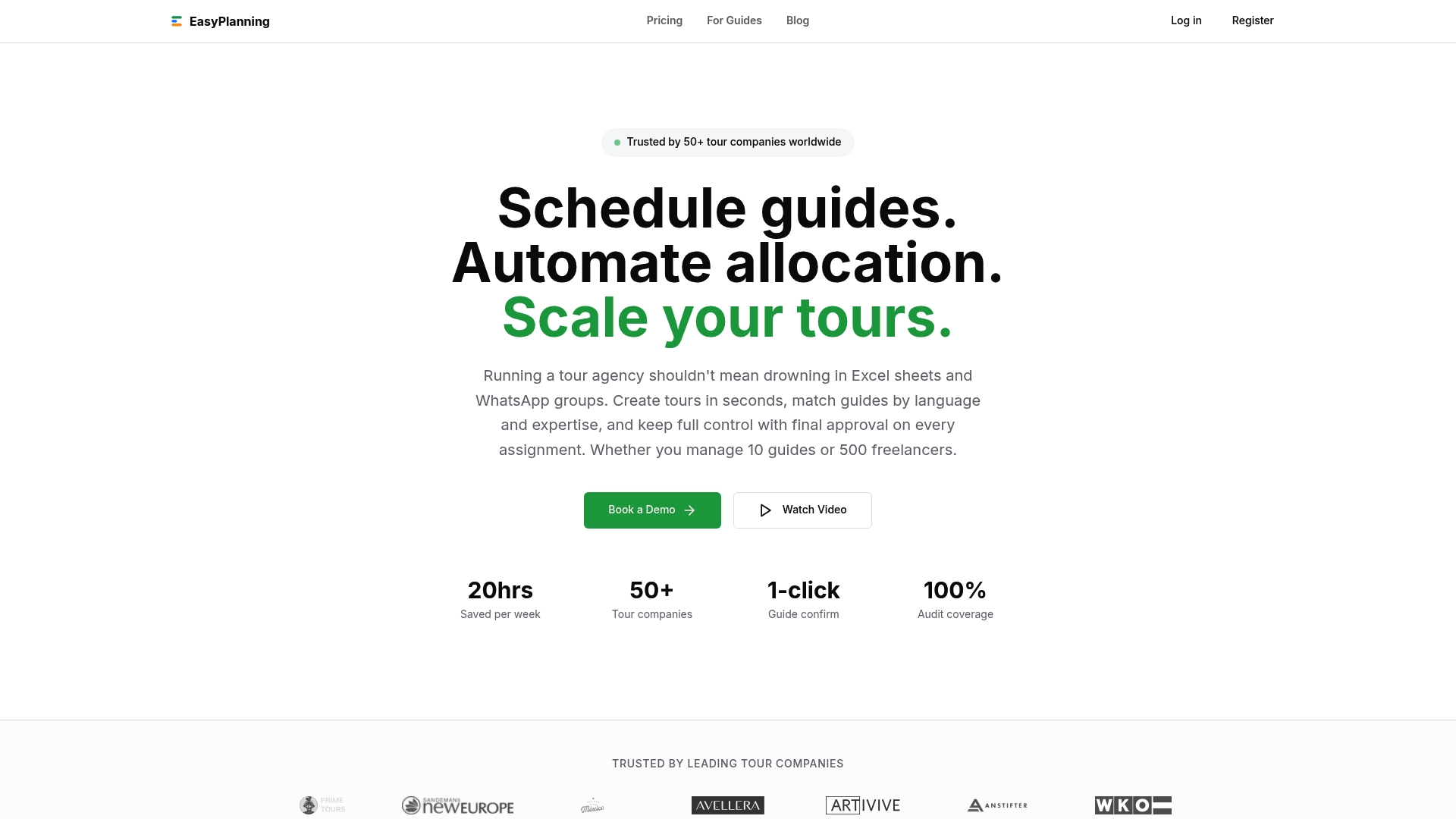
The platform integrates comprehensive guide profiles with automated scheduling that reduces manual work by 40% and improves assignment accuracy by 35%. Features include skill and language filters, backup guide management, certification expiration tracking, and performance metric integration. You'll match guides to tours in seconds, not hours, while reducing conflicts and cancellations that frustrate clients.
EasyPlanning replaces spreadsheets, WhatsApp coordination, and email chains with a centralized system your entire team can access. Guides update their own availability and certifications, keeping profiles current without burdening managers. Automated notifications ensure everyone knows about tours and changes instantly.
Explore EasyPlanning's features to see how guide profile optimization works in practice. Check pricing plans designed for operations of all sizes, from small local companies to large international tour operators. Visit the EasyPlanning blog for ongoing insights about tour management efficiency and industry best practices.
Frequently Asked Questions
What should be included in an effective guide profile?
An effective guide profile must include skills, languages, availability, certifications, backup guide information, and performance data. These elements enable accurate matching between guides and tours while providing managers with the information needed for quick scheduling decisions. Including backup contacts and certifications reduces cancellations and builds client trust.
How do guide profiles reduce tour cancellations?
Guide profiles reduce cancellations by including backup guide details that enable quick reassignment when primary guides become unavailable. Up-to-date availability calendars and automated notifications reduce scheduling errors that force cancellations. Operations using comprehensive profiles with backup systems report cancellation reductions of 15 to 20%.
Can small tour companies benefit from complex guide profiles?
Small tour companies should keep profiles simple, focusing on essential certifications, availability, and core languages. Complex skill taxonomies and extensive performance tracking create maintenance overhead that small teams can't justify. Simplicity aids ease of use and minimizes training requirements while still improving scheduling accuracy.
What role do performance metrics play in guide profiles?
Performance metrics enable data-driven guide assignments based on objective quality indicators rather than subjective impressions. Tracking punctuality, client ratings, and tour completion statistics helps managers assign the best guides to high-value tours. Operations integrating performance data into profiles report customer satisfaction improvements of up to 15%.