
Every busy tour operation manager knows the frustration of searching multiple calendars, chasing guide confirmations, and correcting booking mistakes that impact client trust. Manual scheduling often leads to double-bookings, missed updates, and unnecessary stress for your team. Embracing a tour calendar management system can transform how you organize tours, automate assignments, and enhance communication with guides, all in one place. Discover how this technology can replace scattered spreadsheets and bring new order to your operational flow.
Table of Contents
Key Takeaways
| Point | Details |
| Centralized Scheduling | A tour calendar management system consolidates scheduling, reducing chaos and enhancing operational efficiency. |
| Automated Conflict Detection | Modern platforms automatically prevent double-bookings, ensuring smooth operations and improving client satisfaction. |
| Intelligent Guide-Client Matching | These systems match guides to tours based on skills and availability, streamlining assignments and enhancing client experiences. |
| Proactive Problem Prevention | Utilizing real-time updates and analytics can help identify issues before they affect tours, improving overall management. |
Defining Tour Calendar Management Systems
A tour calendar management system is the backbone of modern tour operations. It’s software that organizes, schedules, and tracks every aspect of your tour business from booking through completion.
At its core, a tour calendar management system serves as a centralized scheduling hub for guides, tours, clients, and resources. Think of it as replacing the scattered spreadsheets, email chains, and WhatsApp messages that currently consume hours of your week. Instead of hunting through multiple documents to find guide availability or tour dates, everything lives in one organized calendar view.
These systems handle several critical functions simultaneously:
-
Guide assignment: Match qualified guides to specific tours based on language skills, certifications, and availability
-
Tour scheduling: Create and manage tour dates across your calendar with real-time visibility
-
Conflict prevention: Automatically detect scheduling conflicts before they become problems
-
Client-guide matching: Ensure the right guide gets paired with the right tour for quality experiences
-
Cancellation management: Process cancellations and reassignments without manual chaos
Modern tour calendar systems go deeper than basic scheduling. They enable comprehensive end-to-end automation by integrating all the pieces of your operation. When a tour is created, the system automatically notifies relevant guides, tracks their responses, manages approvals, and maintains a complete audit trail of every action.
What separates effective systems from mediocre ones is how they handle the real-world friction points you face daily. Does the system prevent you from assigning an already-booked guide to another tour? Can it notify guides across multiple communication channels? Does it capture approval workflows so you’re never left wondering who said yes to what?
The difference between manual scheduling and a managed calendar system is the difference between chaos and control. You gain hours back each week while reducing the human errors that damage client relationships.
For mid-sized tour agencies, the impact is measurable. You eliminate double-bookings, reduce response times from hours to minutes, and create a transparent record of every scheduling decision. Your guides know exactly when they’re working. Your clients know their tours are confirmed with qualified guides. Your operations team knows nothing slips through the cracks.
The right system transforms calendar management from a headache into your operational advantage. It’s not about managing a calendar differently—it’s about managing your entire tour business more intelligently.
Pro tip: Start by mapping your current scheduling pain points before selecting a system. Identify whether you struggle most with guide availability tracking, conflict resolution, or communication delays. Choose a system that directly solves those specific problems rather than forcing your workflow to fit generic software.
Key Features of Modern Scheduling Platforms
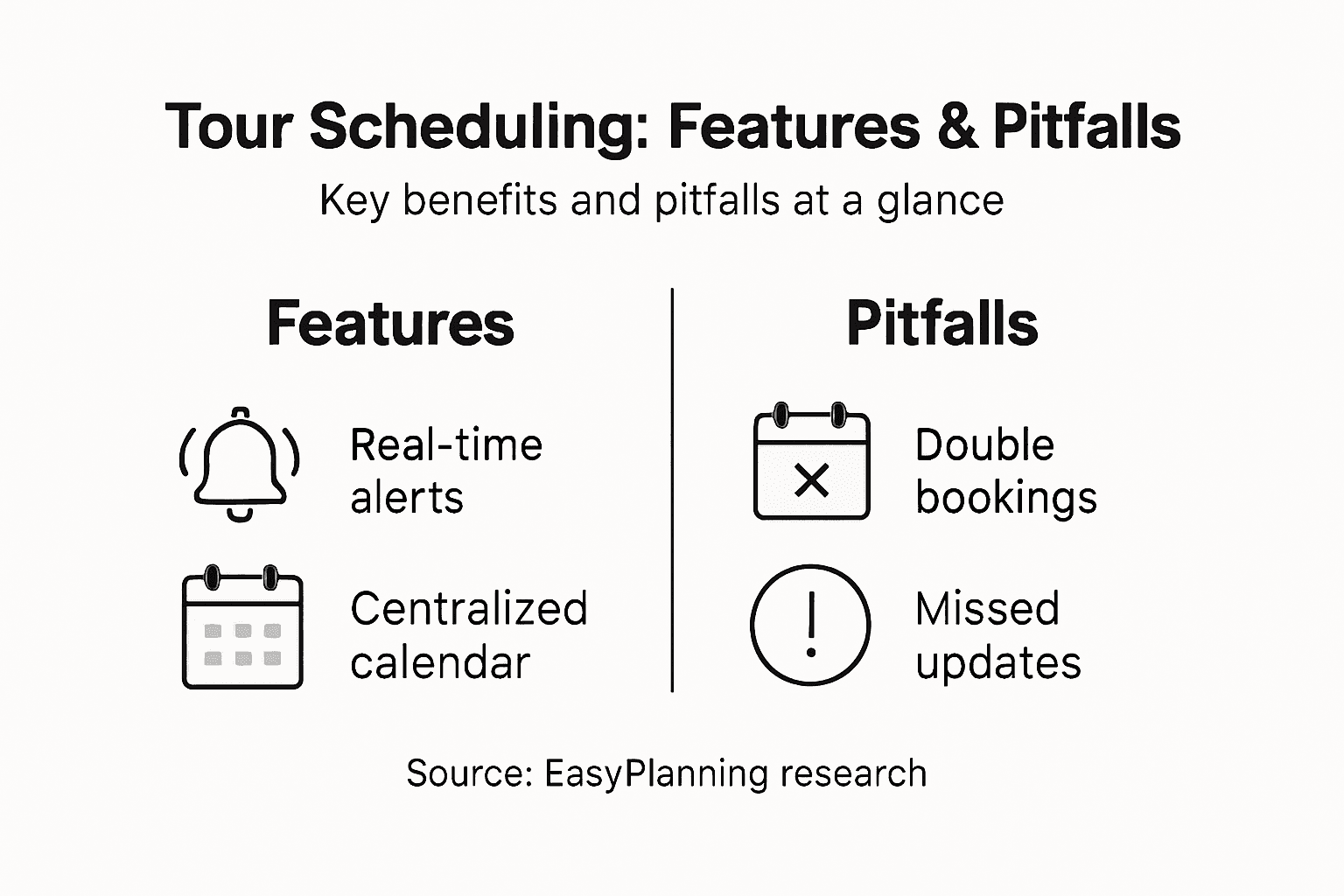
Modern scheduling platforms are built to solve real operational headaches. They combine automation, real-time visibility, and intelligent matching to replace the manual chaos of spreadsheets and scattered communications.
The best platforms share core capabilities that directly impact your daily operations. Here’s what separates effective scheduling systems from basic calendar tools:
-
Automated conflict detection: Prevents double-bookings and scheduling overlaps before they happen
-
Real-time synchronization: Updates instantly across all users so everyone sees current availability
-
Intelligent guide matching: Considers language skills, certifications, and tour requirements automatically
-
Mobile accessibility: Lets guides confirm assignments and check schedules from anywhere
-
Centralized communication: Sends notifications and updates through integrated messaging rather than scattered channels
-
Approval workflows: Tracks who approved what and when, creating accountability and transparency
-
Analytics and reporting: Shows scheduling patterns, guide utilization rates, and operational bottlenecks
These features work together to create efficiency gains. When you leverage AI and cloud technologies, the system becomes smarter over time, learning your patterns and preferences.
For tour operators specifically, the game-changer is automated guide-client matching. Instead of manually reviewing each guide’s qualifications against tour requirements, the system matches them instantly based on skills, language proficiency, certifications, and availability. This cuts your assignment time from hours to minutes while improving match quality.
Modern platforms reduce scheduling conflicts by automatically detecting availability clashes the moment they occur, not days later when everyone’s already made other plans.
Real-time updates matter more than you might think. When a guide becomes unavailable, your system instantly notifies relevant team members and flags affected tours. No more discovering problems when clients call to confirm.

Rethinking your approach to scheduling means moving from reactive problem-solving to proactive prevention. These platforms give you that shift by catching issues before they impact clients.
Data analytics is the feature many operators overlook until they use it. You can suddenly see which guides handle peak-season tours best, how long assignments typically take to confirm, and where your scheduling bottlenecks actually are. This intelligence drives continuous improvement.
Pro tip: Before adopting a platform, identify which feature solves your biggest pain point first—whether that’s conflict prevention, communication speed, or approval transparency. Start with that core feature and expand to others once your team is comfortable.
Types of Guide Assignment Strategies
Guide assignment isn’t one-size-fits-all. Different operational models work for different tour operators, and the best strategy depends on your business structure, tour diversity, and growth stage.
Tour operators typically work with guides through different employment models. Each model affects how you assign guides and manage their availability:
Here is a comparison of common guide employment models and their operational impacts:
| Guide Model | Flexibility Level | Scheduling Complexity | Training Consistency |
| Company-employed | Low | Simple to moderate | High |
| Freelance | High | Complex | Variable |
| Hybrid | Moderate | High | Moderate |
| Specialized assignment | Varies by need | Moderate to high | High for experts |
-
Company-employed guides: Full-time staff with predictable availability and consistent training
-
Freelance guides: Independent contractors offering flexibility but requiring careful coordination
-
Hybrid model: Mix of employed guides plus freelancers to balance stability and flexibility
-
Specialized assignments: Guides matched to specific tour types like cultural, nature, or urban tours
Your assignment strategy must align with your operational model. A company with ten full-time guides manages assignments differently than one working with fifty freelancers across multiple regions.
Effective assignments prioritize specific evaluation criteria. When ranking guides for specific tours, operators consider language proficiency, local cultural knowledge, time management skills, and ethical awareness. These factors directly impact client satisfaction and tour quality.
The skill-based matching approach is where most operators see immediate gains. Rather than assigning the next available guide, you match guides based on tour requirements. A cultural history tour needs different expertise than an adventure trek. A guide fluent in Mandarin becomes invaluable for Chinese tourist groups.
Strategic guide assignment balances availability with expertise, ensuring the right guide leads each tour for maximum client satisfaction and operational efficiency.
Language skills often drive assignment decisions. Operators with international clients prioritize guide expertise and language proficiency as primary matching criteria. A guide speaking five languages becomes your most flexible resource.
Local knowledge matters tremendously. Guides with deep understanding of regional history, culture, and logistics create superior experiences. This knowledge can’t be quickly trained, making experienced local guides invaluable for complex or specialized tours.
Availability management overlays all strategies. You must balance perfect skill matching against the reality that your best guide might already be booked. Smart systems flag when ideal matches are unavailable and suggest the next-best alternative quickly.
The assignment strategy that works scales with your operation. Start with your most important matching criteria—language, expertise, or availability—and build from there as your operation grows.
Pro tip: Create a skills matrix for all your guides listing languages, certifications, tour specializations, and availability patterns. Use this matrix consistently when assigning tours so decisions are based on documented strengths rather than memory or assumptions.
Operational Challenges and Common Pitfalls
Manual tour calendar management creates predictable problems. Even experienced operators struggle with the same recurring issues that cost time, money, and client satisfaction.
The challenges start before tours even begin. During pre-tour preparation, operators face communication breakdowns that lead to incomplete guide briefings, missed special client requests, and unclear expectations about tour scope or difficulty level.
Common pre-tour pitfalls include:
-
Double-bookings: Assigning the same guide to overlapping tours
-
Incomplete documentation: Missing guide certifications, language confirmations, or special skill requirements
-
Low visibility into availability: Not knowing which guides are actually free until last minute
-
Inconsistent communication: Guide confirms availability via WhatsApp but doesn’t see the formal booking
-
Itinerary errors: Tour details don’t match what the guide was told to expect
These issues compound during the tour itself. When coordination lapses occur in tour operations, guides show up unprepared or clients arrive to find their tour guide isn’t who they expected. Negative team dynamics emerge quickly when guides feel blindsided by assignment details.
Post-tour problems are equally damaging. Payment delays and unexpected deductions frustrate freelance guides and erode trust. When guides can’t predict their compensation or when payments drag for weeks, your reputation suffers and recruitment becomes harder.
The following table summarizes where scheduling pitfalls usually occur within the tour operation process:
| Stage | Typical Pitfall | Main Consequence |
| Pre-tour | Double-bookings | Guide confusion, lost tours |
| During tour | Itinerary errors | Poor client experience |
| Post-tour | Payment delays | Reduced guide satisfaction |
Operational failures during tours destroy client relationships instantly and damage guide morale permanently. Prevention is far cheaper than recovery.
Resource mismanagement happens silently. Your best guides get overbooked while others sit idle. You can’t see utilization patterns, so you don’t know if certain guides are carrying the workload while others coast.
Many operators struggle with inadequate risk planning. What happens when your assigned guide gets sick two days before the tour? If you have no backup system, chaos ensues. Clients call, guides scramble, and your reputation takes the hit.
Communication gaps are perhaps the most persistent challenge. Guides receive assignments through multiple channels: email, text, WhatsApp, phone calls. Critical details get lost or missed. Clients see outdated information. Your team doesn’t know what’s actually confirmed.
These challenges intensify as your business grows. What worked with five guides and three tours weekly breaks completely at twenty guides and thirty tours.
Pro tip: Document every operational failure for one month, categorizing them as pre-tour, during-tour, or post-tour issues. Identify which problems repeat most frequently. That’s your starting point for selecting calendar management solutions that prevent those specific failures.
Transform Your Tour Scheduling with EasyPlanning
The article highlights the challenges of managing tour calendars manually such as double bookings, communication gaps, and inefficient guide assignments. You need a centralized scheduling hub that prevents conflicts, automates guide-client matching, and keeps your entire operation transparent and controlled. If managing guide availability, avoiding scheduling errors, and speeding up communication are key goals for you, then a purpose-built solution is essential.
Take control of your tour operations today with EasyPlanning. Our web-based SaaS platform replaces scattered spreadsheets and messaging apps by consolidating scheduling, guide profiles, automated matching, and approval workflows into one intuitive calendar interface. Experience the peace of mind that comes from eliminating double bookings and empowering your team with real-time updates. Don’t wait for chaos to slow you down. Visit EasyPlanning now and see how easy it is to boost your scheduling efficiency with a tool designed specifically for tour operators. Start streamlining your process and delighting clients and guides alike.
Frequently Asked Questions
What is a tour calendar management system?
A tour calendar management system is software that organizes, schedules, and tracks all aspects of a tour business, from bookings to tour completion, ensuring everything is centralized and easily accessible.
How can a tour calendar management system improve efficiency?
By automating scheduling, detecting conflicts in real-time, and providing transparent communication between guides and clients, a tour calendar management system significantly reduces manual tasks and errors, leading to increased efficiency.
What are the key features to look for in a tour calendar management system?
Look for features such as automated conflict detection, real-time synchronization, intelligent guide matching, mobile accessibility, centralized communication, approval workflows, and robust analytics and reporting to enhance your operations.
How do guide assignment strategies vary among tour operators?
Guide assignment strategies can vary based on employment models, such as company-employed, freelance, hybrid, or specialized assignments, each affecting flexibility, complexity, and consistency in training and availability management.